Table of Contents
In cool-season areas, choose a blend centered on fine fescues such as chewings, hard, creeping red, and sheep. In transition and warm zones, a shade-tolerant tall fescue or a shade-selected St. Augustine cultivar usually outperforms the generic shade mixes on the bag. The right pick depends on the direct sunlight hours in your darkest patch and which species is already thriving at the shade boundary.
The signal worth paying attention to
Retailers classify seed by climate zone, but shade tolerance depends on a different factor. When a lawn thins under trees or along a north-facing wall, the key variable is almost always the same: hours of direct or diffuse light per day during the growing season.
Four hours of clear morning sun is a completely different environment from four hours of dappled afternoon light filtering through a dense oak canopy. Both may read as "part shade" on the bag, yet they support different species and seeding densities.
Measure the light budget of the poorest patch first. Species, blend, seeding rate, and mowing height all depend on that single number.
How to read the evidence
You can estimate light without tools by observing the same spot at mid-morning, solar noon, and mid-afternoon on a clear day. Record whether the area sits in direct sunlight, bright dappled light, or full shade at each point, then translate that into an approximate range of direct-sun hours.
Six or more hours of direct sun
Shade is not the constraint. Any regionally suitable seed should work, so there is no need to pay extra for a shade-specific variety.
Four to six hours
In the transition zone, choose a shade-tolerant tall fescue. In the north, use a fine fescue mix. In the deep south, a shade-adapted St. Augustine is the practical pick.
Two to four hours
Fine fescue blends with chewings and hard fescue work best in cooler areas; shade-tolerant St. Augustine is the warm-region equivalent.
Under two hours
No turfgrass species will hold a dense stand for long. A shade-tolerant groundcover, a mulch ring, or converting the strip to a planted bed is the more honest solution.
The second clue is what is already thriving at the sunny edge of the shaded area. That grass has adapted to the microclimate. If healthy fine fescue is creeping into the shade, reseeding with it is a safe move. If bermuda grass stops at the shade line, that confirms a cool-season shade-tolerant species is your best realistic option.
A concrete example: a north-facing side yard under two maples
Picture a common suburban problem. The strip between the house and the property line faces north. Two large silver maples throw dense shade from late April to October. Grass once grew there when the trees were smaller, but over the past three years the ring around each trunk has bared to soil and the rest of the strip has gone patchy.
A brief light audit reveals:
- Mid-morning: complete shade cast by the house.
- Solar noon: roughly ninety minutes of dappled light as the sun crosses a gap in the canopy.
- Mid-afternoon: full shade returns as the maples dominate.
Species verdict: about two hours of usable light points to a fine fescue blend, seeded heavily and mowed high.
Two hours excludes warm-season grasses and rules out Kentucky bluegrass, which is commonly recommended to receive at least four to six hours of light to stay dense. It sits at the lower edge for tall fescue and comfortably inside the range for a fine fescue blend.
The buying decision is now clear: a fine fescue blend heavy in chewings and hard fescue, sown at the upper recommended rate for pure fine fescue, and mowed on the taller side (many extension programs suggest around three and a half to four inches). Skip spring fertilization rates that push blade growth the plant cannot support in low light.
What this example leaves out
No brand, no proprietary coating, no "perfect" mix. Those depend on regional availability and price. The species-first method gets you to the right shelf; picking the exact bag is a small decision from there.
Where certainty breaks down
Species matching is a strong first filter, but it does not guarantee a lawn. Three site conditions often override a well-chosen seed: root competition, compaction, and drainage. Work through each before you decide the seed itself is the problem.
Root competition
Maples in particular develop dense feeder roots in the top few inches of soil, the same layer new turf roots want to occupy. A shade-perfect species still loses if it is losing the race for water and nutrients. The tell is easy to spot: seedlings germinate, look promising for two or three weeks, then collapse during the first dry stretch.
Soil compaction
Say you inherit a lawn that once served as a contractor's staging area. Foot traffic or old equipment compresses the soil, and shade species feel it faster than sun turf because their root systems are finer and shallower. If you cannot push a screwdriver more than two inches into the soil by hand, core aeration before seeding matters more than the type of seed you buy.
Drainage
Poor drainage under trees can encourage fungal issues in fine fescues, which are commonly noted by extension programs as susceptible to leaf spot and red thread when they stay wet. If a shaded area is still visibly damp more than a day after rain, sowing in early fall rather than spring gives the grass a cooler, drier window to establish.
When no grass will win
Some yards simply do not have a viable turf answer. When light drops below two hours, tree roots dominate the topsoil, and foot traffic is frequent, no species will hold. In that case, skip seed entirely and choose a shade-tolerant groundcover, a mulched bed with native shade perennials, or a small hardscape feature. An identifier app can still help by naming what is currently surviving so you replace it with something that fits.
Where the app earns its place
The weakest step in the workflow is reading the margin. Most homeowners can tell grass from weed, but few can confidently name the species at the edge of a shady patch. That detail matters, because overseeding with the species already succeeding beside the shade is usually a better move than fighting it with something new.
The Grass Identifier app can help here. Photograph the healthiest tuft at the shade line and use the suggested species as a starting point rather than a final answer. AI grass identification is a useful shortcut, not a perfect one, and cultivar-level distinctions are difficult from a single phone photo. Family-level suggestions are the more reliable read; a local cooperative extension office remains the authoritative confirmation before you buy seed.
Used honestly, an ID app fits into shade seed shopping in a few small ways:
- Names what is thriving at the margin so your new seed blends with the survivor instead of competing with it.
- Helps you separate turf from common shade-adjacent lookalikes such as nimblewill, poa trivialis, or violet, which quietly change the control plan.
- Keeps a specific species name in your pocket so you shop for a defined answer in the seed aisle instead of guessing.
The app does not measure light, test soil, or set your seeding rate. Those are still your calls. What it changes is confidence in the species decision, which sets up everything else. If you want a deeper look at how these tools weigh visual cues, our rubric for judging blade and seed-head accuracy is a useful sanity check before you spend.
Use the evidence in the real world
The practical path from bare patch to bought bag is short:
- Audit the worst patch's usable light on a clear day at mid-morning, noon, and mid-afternoon to estimate a direct-sun-equivalent range.
- Identify what is thriving at the sunny edge of the patch and choose species that match that survivor rather than competing with it.
- Select a species class based on the light-hours guidance above, and prefer a mixed blend over a single-cultivar bag unless you want a specific monoculture.
- Address root competition, compaction, and drainage before seeding rather than expecting seed to fix them later.
- Seed in the recommended window: late summer to early fall for cool-season, late spring to early summer for warm-season once soil is consistently warm.
- Mow high; more leaf surface captures more of the limited light in a shady patch.
Once the seed is down, watering, mowing height, and traffic decisions in the first month often decide whether a promising stand actually survives. Our step-by-step plan for the first weeks after seeding walks through those calls so you do not undo the species work with early-season mistakes.
The species-first approach will not turn every shady yard into a magazine lawn, but it will break the annual cycle of buying a generic shade mix and blaming the seed when it fails in the same ring around the same tree. The next check worth making today is the simplest one: walk out to the shady patch, look at the healthiest grass clinging to life at its edge, and name that species before you spend anything more on seed.
Related Articles

Grass Identifier Apps Compared: A Rubric for Blades, Seed Heads, and Mixed Lawns
For lawn decisions, a turf-focused grass-identifier app like GrassID beats a generalist plant tool. This rubric shows how to test any option using your
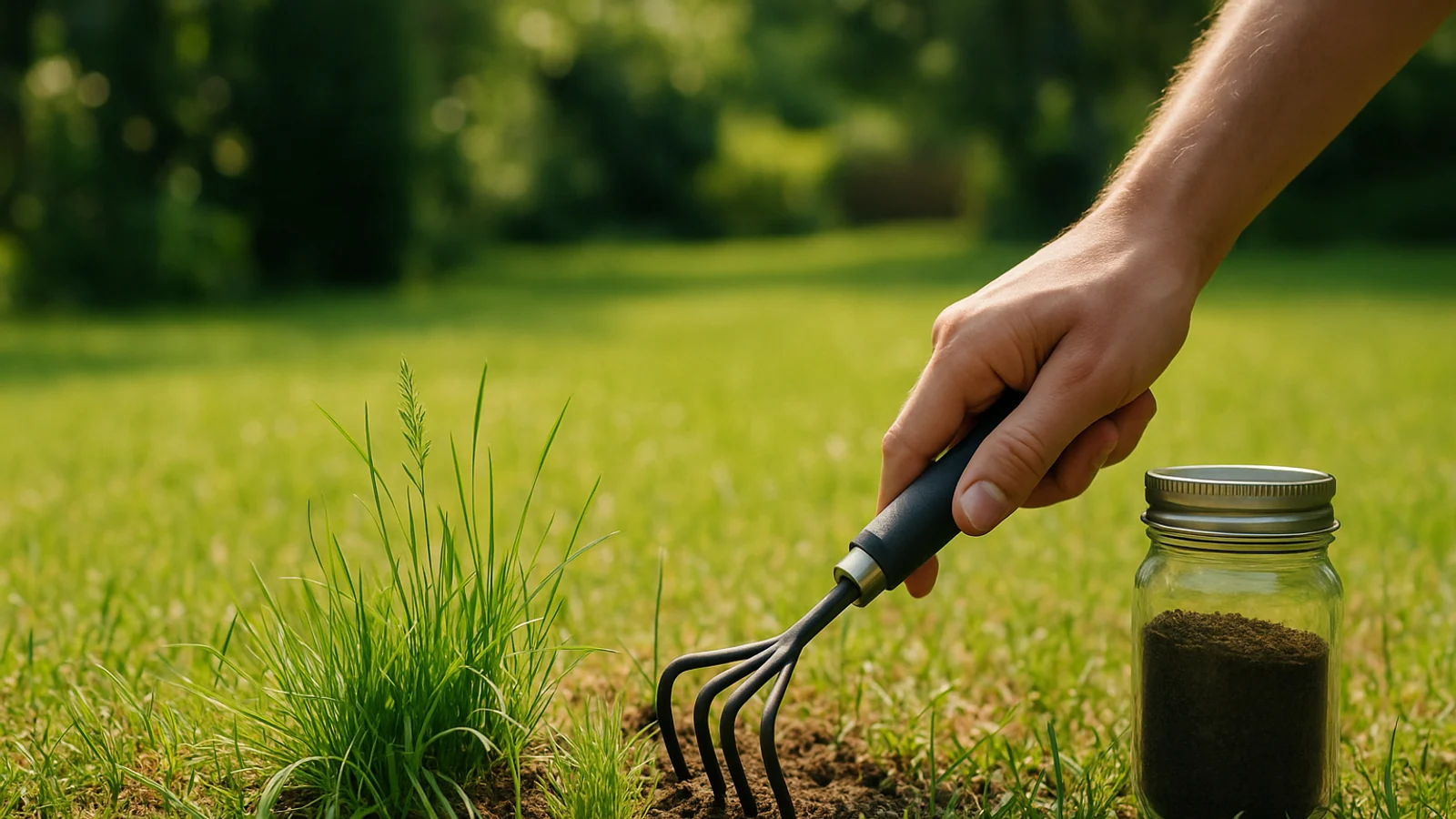
Spring lawn care checklist: what to do first once you know your grass
Most spring lawn work goes sideways because it starts with a calendar instead of a species. Identify what is actually growing, then run the right
Free lawn care apps worth installing before you pay for anything
A short field guide for price-sensitive lawn owners: how to build a lean free stack, what to walk away from, and where photo-based grass identification