Table of Contents
The assumption to leave behind
Most people believe a general plant identifier should handle grass just fine. It is green, common, and only a handful of species appear on suburban lawns. That reasoning feels right, but it is wrong in a specific way that matters if you care about your yard.
General plant apps are trained on plant features that make identification easy: a distinctive flower, a leaf with clear venation, a fruit, or a bark pattern. Turfgrass rarely offers any of those. If you have wondered why most general identifiers keep missing turf, a detailed teardown at /blog/why-most-plant-id-apps-get-grass-wrong-a-teardown/ explains the model-level reasons.
The short version:
- What general plant apps look for: flowers, broad leaves with venation, fruit, and bark.
- What a mowed lawn actually offers: narrow blades, no flowers, no fruit, no bark, and reproductive structures cut off every two weeks.
The assumption to leave behind is that grass is a small subset of plants. Identification is a separate problem.
What works instead
The workable idea is narrower and less glamorous: build a tool that only tries to identify grass, and teach it to focus on what actually distinguishes one grass from another. That means blade width and tip shape, the way a new leaf emerges from the sheath, ligule and auricle details at the collar, growth habit, seed head architecture when it appears, and the color and density patterns a lawn shows across seasons.
None of those features are exotic. Turf professionals have used them for decades in the field. What is new is packaging that logic into something a homeowner can use in the yard without a hand lens, a key, or a horticultural background.
The founder's decision, and the reason anyone types "grass identifier app founder" into a search bar, was to stop trying to be everything and to be genuinely good at one narrow thing homeowners actually care about: the grass under their feet. A grass-only tool has a reason to talk about mowing height, overseeding windows, and warm-season versus cool-season transitions. A general plant app has no natural home for that guidance.
A compact method to follow
Whether you are using Grass Identifier or another tool, the same field method will yield a better answer. It works because it feeds the identifier the features that actually distinguish grass species rather than those that distinguish broadleaf plants.
- Pick a healthy patch, not a struggling one. Damaged blades hide the traits an identifier needs.
- Take a single wide photo of the lawn from about waist height. Fill most of the frame with turf, not sky or mulch.
- Pull a single blade and photograph it flat against a neutral background. A driveway, a plain phone case, or the back of a notebook works.
- Get a close photo of the collar region where the blade meets the sheath. Ligules and auricles are found there, and they are decisive for many species.
- If a seed head is present anywhere on the property, photograph it too. Seed heads are the single most diagnostic feature grass offers.
- Note your region and the sun exposure of the patch. Warm-season and cool-season grasses overlap in some zones, and context narrows the shortlist.
The method is intentionally dull; its dullness is what ensures its reliability.
When the rule has exceptions
Every method has its edges, and this one has three worth noting before you run into them. Photo-based identification also has limits no method can erase: lighting, seasonal dormancy, mowing state, and camera quality all affect what any identifier can see.
Mixed lawns
Many established lawns are not composed of a single grass species. As a rough illustration, a cool-season yard in the transition zone might be mostly tall fescue, with meaningful shares of Kentucky bluegrass and perennial ryegrass, plus a creeping bentgrass patch by the downspout. No single photo can resolve that. The honest answer is to identify the dominant species and note that the stand is mixed, which is often the most useful answer for a homeowner planning overseeding.
Off-season timing
Warm-season grasses go dormant and turn straw-colored in winter. Cool-season grasses become stressed and thin in midsummer. An identifier looking at dormant Bermuda in February is working with almost no color information and a compressed growth pattern. If the answer feels uncertain, wait for a growth window and try again.
Weeds that look like grass
Crabgrass, nutsedge, and annual bluegrass are often confused. Nutsedge, in particular, is not a grass at all, though it lives in the lawn and looks like one at a glance. Identification is a starting point, not a herbicide recommendation; treat any weed-control decision as a separate call to a local extension office or lawn pro.
How Grass Identifier supports the method
Grass Identifier follows the same field approach a skilled turf advisor would use. Its capture process focuses on collecting relevant shots and provides a conservative judgment when evidence is limited, instead of forcing a definitive label on an uncertain photo.
- Asks for diagnostic shots: the tool is designed to request a wide framing, a single blade, and a collar close-up when the first photo is insufficient.
- Handles mixed stands honestly: when a lawn clearly is not a single species, the design intent is to flag that rather than pick a label at random.
- Pairs identification with care: once a species is known, the product supports the personalized lawn care tips described in its App Store listing, built around the turf it identified.
Ready to make the next lawn decision with more confidence? Try Grass Identifier App.
Use the insight in practice
Walk outside tomorrow with the six-step method in mind. Pick a healthy patch. Take the wide shot, the single blade, the collar, and a seed head if you can find one. Note your region and sun exposure. Feed those to your preferred identifier and compare the confidence against a single overhead snap.
If you want to weigh tools before committing to one, a practical rubric for judging blades, seed heads, and mixed lawns blog/grass-identifier-apps-benchmarked-accuracy-on-blades-seed-heads-and-mixed-lawns/ is a better starting point than star ratings.
Do that once this week, then bring a sharper question back to whichever tool you use. Not "What is my grass?" but "What should I do this Saturday for my tall fescue in partial shade?" That is the kind of question a specialist can actually answer.
Related Articles
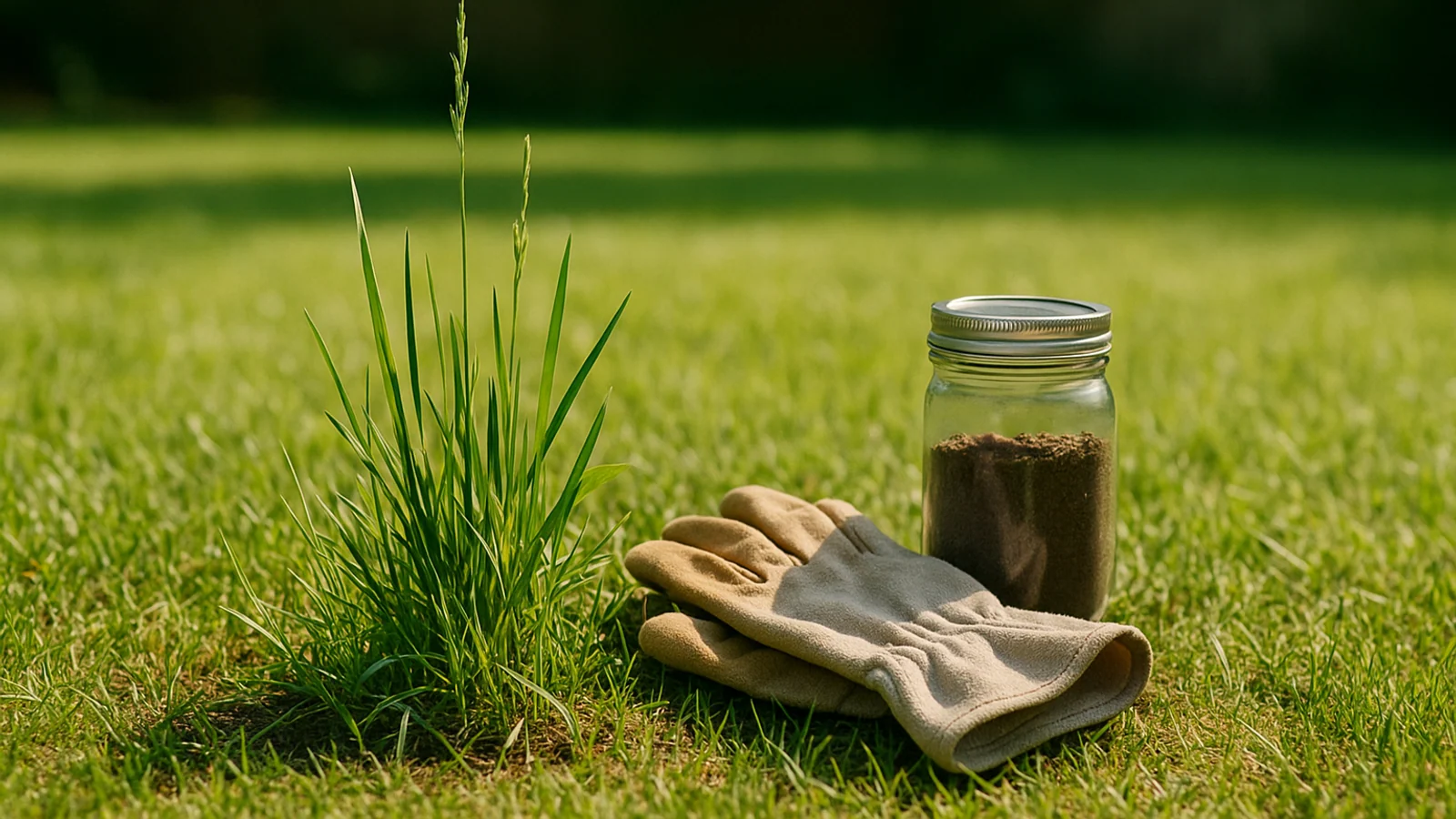
Why most plant ID apps get grass wrong: a teardown
Broadleaf-trained models miss the cues that distinguish turf species. This teardown of why lawn apps get grass wrong shows where the gap lies and how a
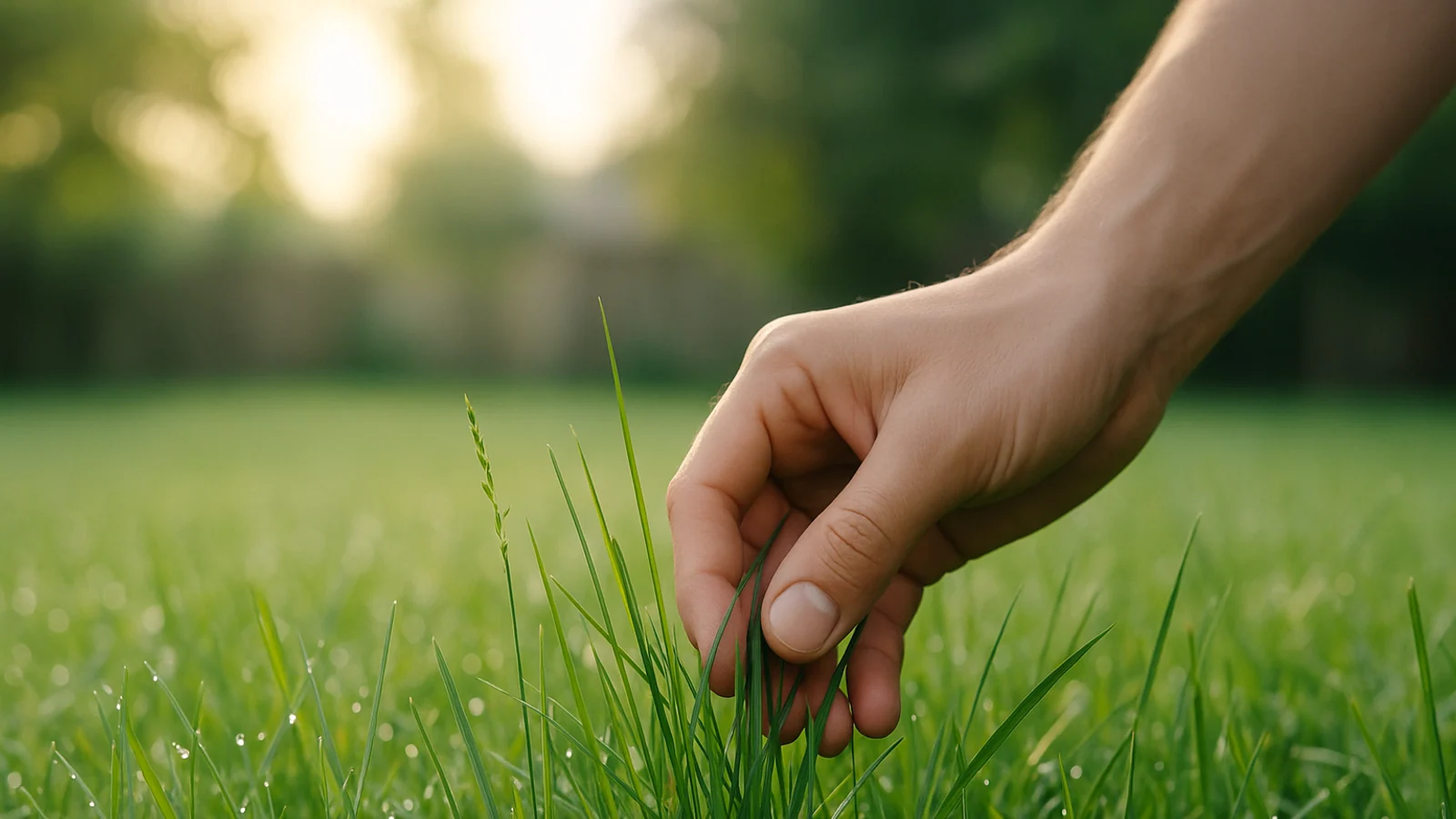
How AI grass identification actually works, explained without the hype
A plain-language look at what a grass identifier actually does with your photos, and how to work with it so the ranked answer becomes a lawn decision you

Free grass identifier apps: what you actually get without paying
A practical guide to what free grass identifier apps actually deliver, where they stop short, and how GrassID's free flow fits into the choice.The